





Introduction — Why Sunsets around Alba Feel Magical
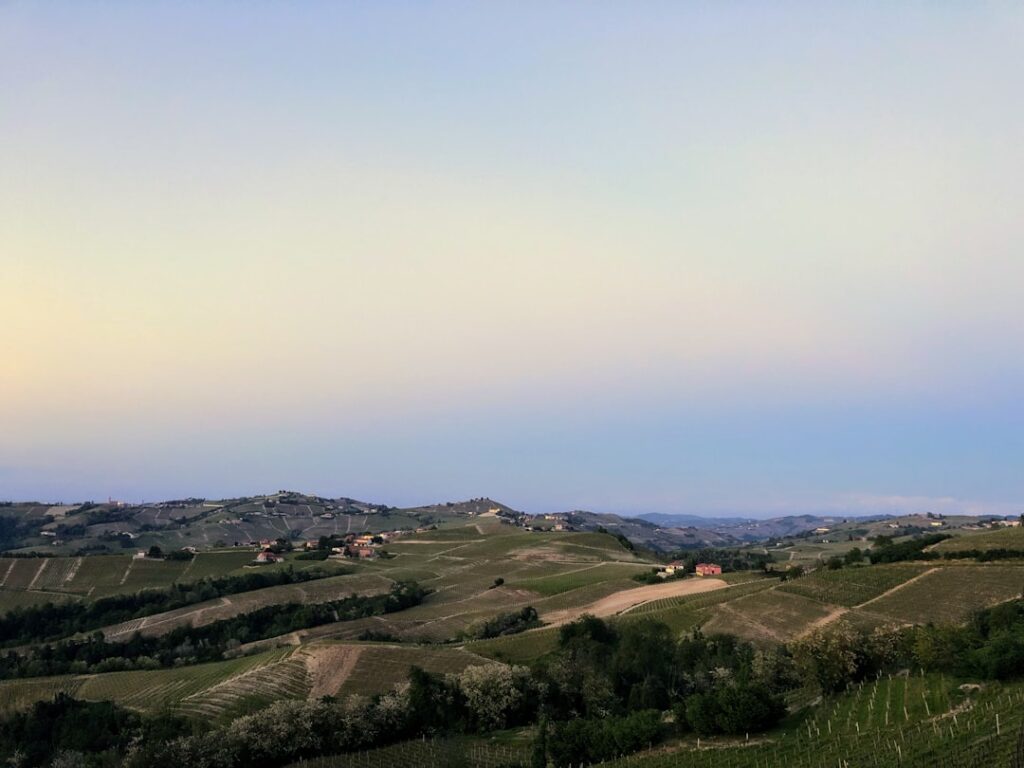
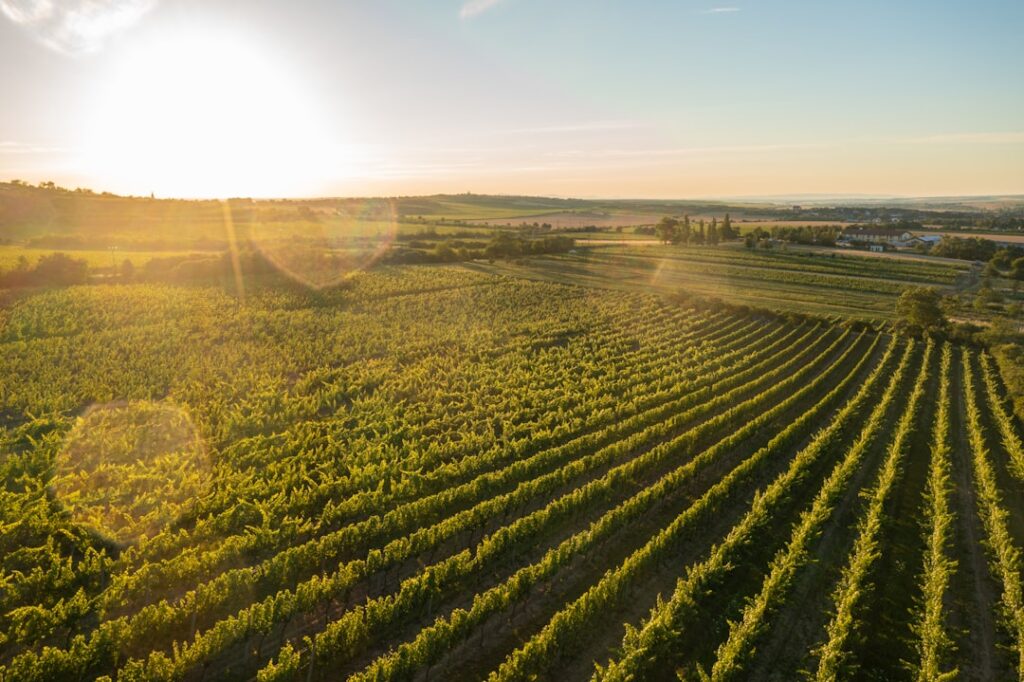
Piedmont, and especially the Langhe area around Alba, has quietly become one of Italy’s most photogenic regions. Rolling hills, neatly ordered rows of vines, hilltop medieval villages and stone castles create a range of silhouettes that come alive as the sun drops. A sunset here is more than just light changing—it’s a full sensory moment where warm tones sculpt the slopes, thin mist sometimes drifts down from the plateaus, and the scent of ripe grapes and earth mixes with hazelnut and Barolo wine aromas. For an amateur photographer or any traveler chasing memorable moments, the golden hour transforms the landscape into postcard-ready scenes.
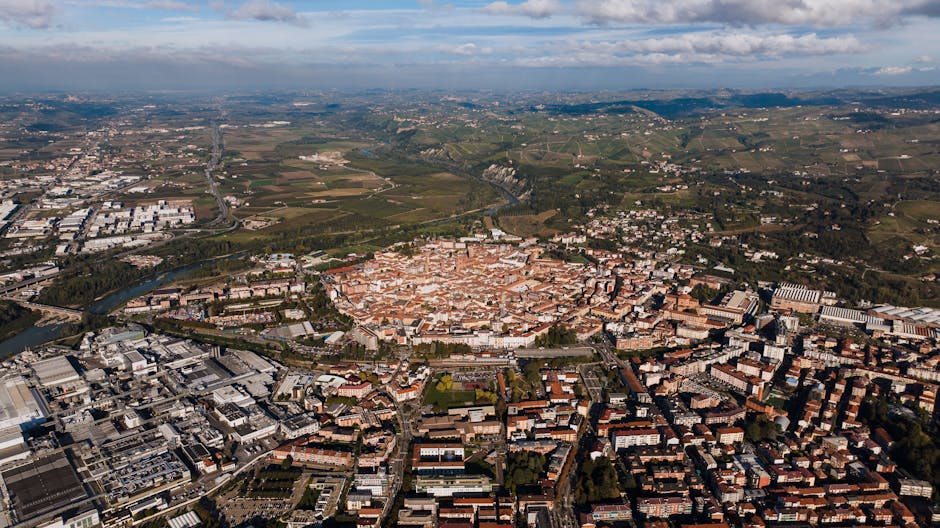
Alba itself, the beating heart of the Langhe, makes an ideal base for reaching a variety of viewpoints within minutes by car. The gentle terrain lets you quickly access many lookouts—some reachable directly by car, others requiring a short walk—but all offering very different compositions at sunset: sharp silhouettes of medieval towers, colorful alleys bathed in low light, or wide panoramas where vineyards form geometric patchworks. Add iconic monuments like Castello di Grinzane Cavour or Castello di Barolo and you have historic and architectural elements that elevate any photo.
Beyond aesthetics, photographing a sunset around Alba also takes practical planning: knowing access routes, opening hours of sites, parking conditions, and local rules (private vs public land, vineyard etiquette). This article outlines several must-see spots with precise addresses, indicative opening times, prices and practical tips to help you optimize your shots—recommended gear, positioning, managing light and crowds. Whether you’re after a high viewpoint, a village terrace or a scenic road lined with vines, you’ll find concrete advice to capture the magic as the sun dips over the Langhe.
Must-see Panoramas of the Langhe
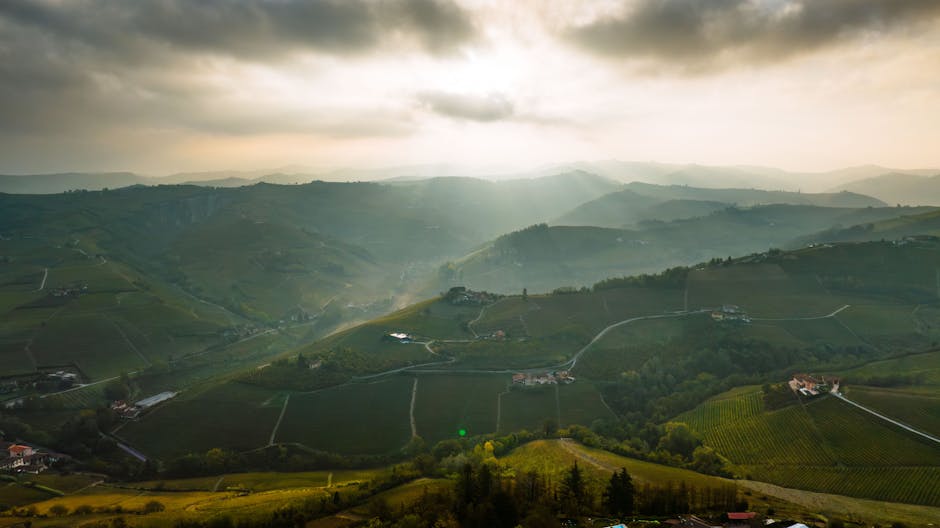
Belvedere di La Morra — La Morra, Piazza Castello, 12064 La Morra CN. This natural promontory, easily reached from the old town (public parking at Piazza Castello), is famed for its 180° view over the Barolo hills. Best window: 30–60 minutes before sunset and up to 20–30 minutes after to enjoy intense colors and the blue hour. Access: free. Hours: site accessible at all times; most shops and bars on the square close between 19:00 and 23:00 depending on the season. Photo tip: use a graduated neutral-density filter if the sky is very bright and favor a wide-angle focal length (24–35 mm) to include a vineyard row in the foreground.
Colle d’Alba (Colle di Santa Rosalia / Colle di Alba) — SP183 road, panoramic point before Diano d’Alba, 12052 Diano d’Alba CN. Accessible by car, this less-touristy spot offers a wide panorama over the Tanaro plain and surrounding hills. Access: free. Hours: open access. Parking: a few spaces along the road; watch for traffic. Tip: arrive 45 minutes before sunset to scout a foreground (vine, olive tree, rock outcrop) and play with silhouettes.
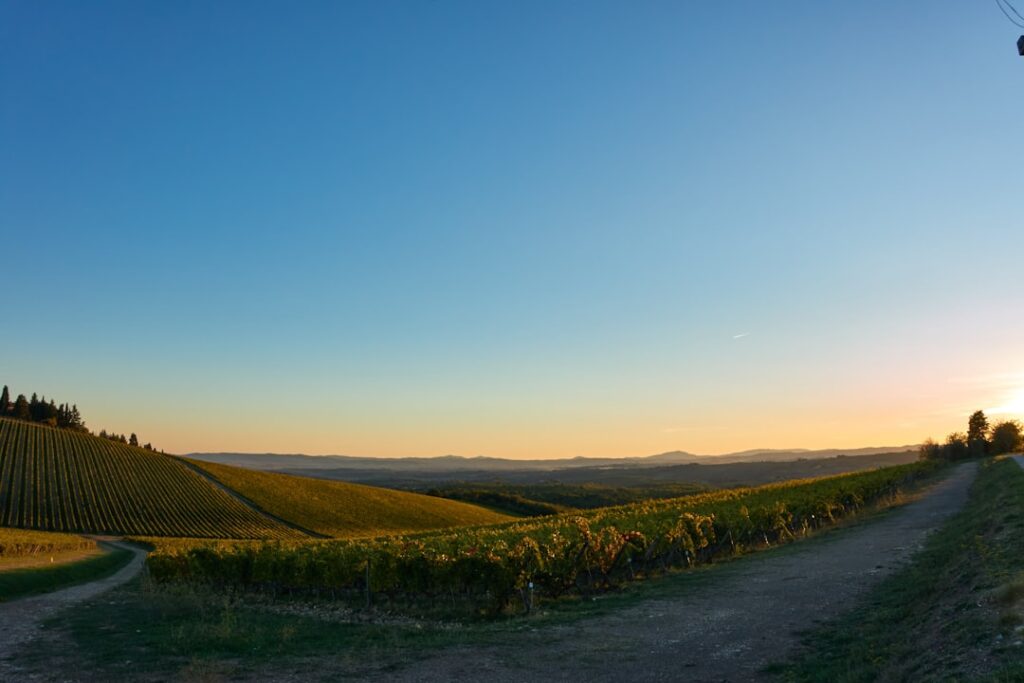
Belvedere di Barolo — Piazza Falletti 1, 12060 Barolo CN (Castello di Barolo / Museo del Vino). The village of Barolo, surrounded by legendary vineyards, has several elevated spots; one of the most photographed is the climb toward Castello di Barolo. Entry to the Museo del Gusto / regional wine shop (Castello di Barolo): around €5–10 depending on the exhibit. Typical hours: 10:00–18:00 (seasonal variation), and the belvedere is reachable from public streets in the evening. Practical tip: combine the castle silhouette with the golden vines backlit for a dramatic effect.
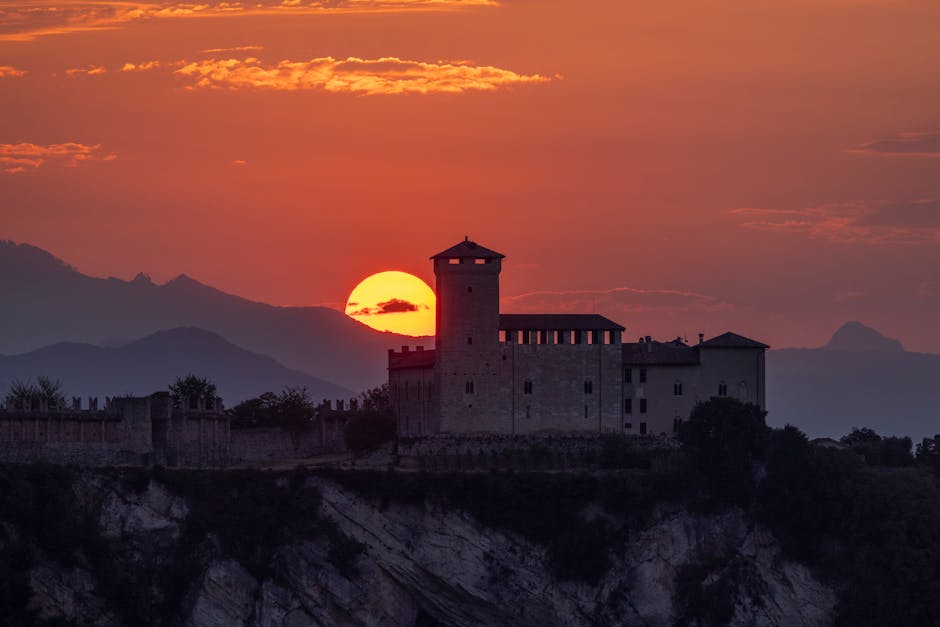
Hilltop Castles and Villages for a Regal Sunset
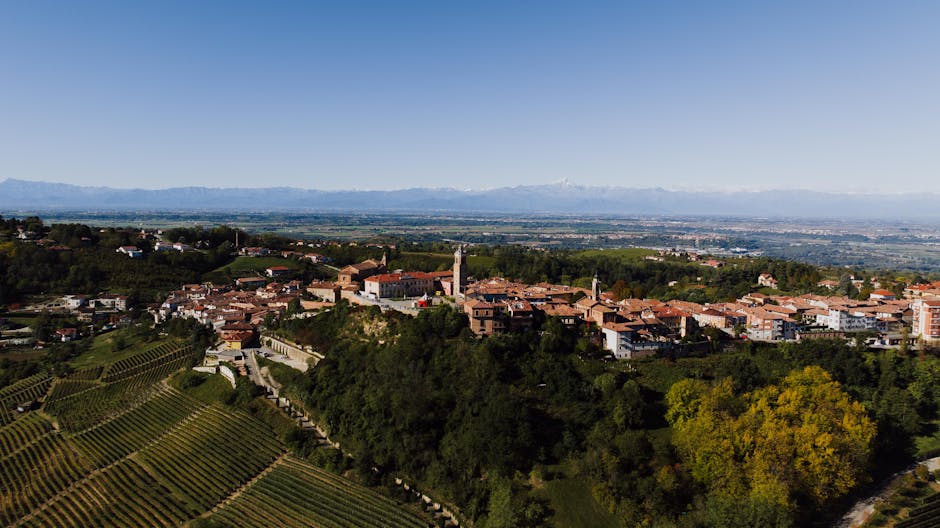
Castello di Grinzane Cavour — Piazza del Castello 1, 12060 Grinzane Cavour CN. This castle-museum and former home of Count Cavour overlooks wide vineyards and the village. Prices: museum ticket roughly €6–8 (reduced rates available). Hours: typically 09:30–13:00 and 14:30–18:00 (seasonal hours; possible closures in low season). For sunset: the outdoor terrace and surrounding roads offer splendid views as the light caresses the ancient stones. Plan ahead if you want to visit the interior before sunset.
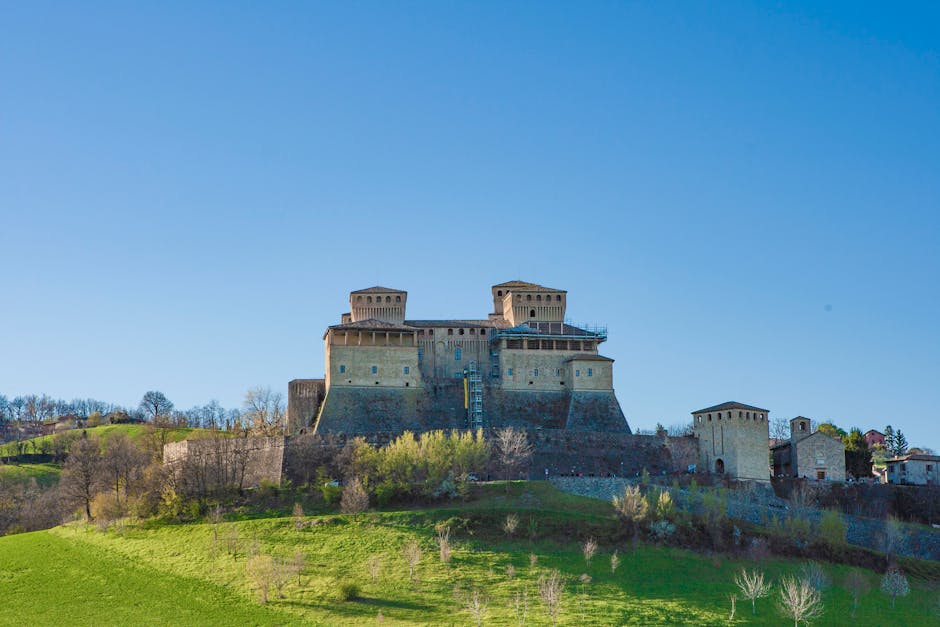
Castello di Serralunga d’Alba — Piazza Castello 1, 12050 Serralunga d’Alba CN. A striking medieval castle with slender lines, visible from afar, it rises on a limestone hill and cuts a beautiful outline against the fiery sky. Entry to the castle-museum: usually €6–10; seasonal hours (often 10:00–17:00). The best photo spot is the small square in front of the castle and the paths below, which offer varied vantage points. Tips: for night shots after sunset, bring a small torch and a tripod.
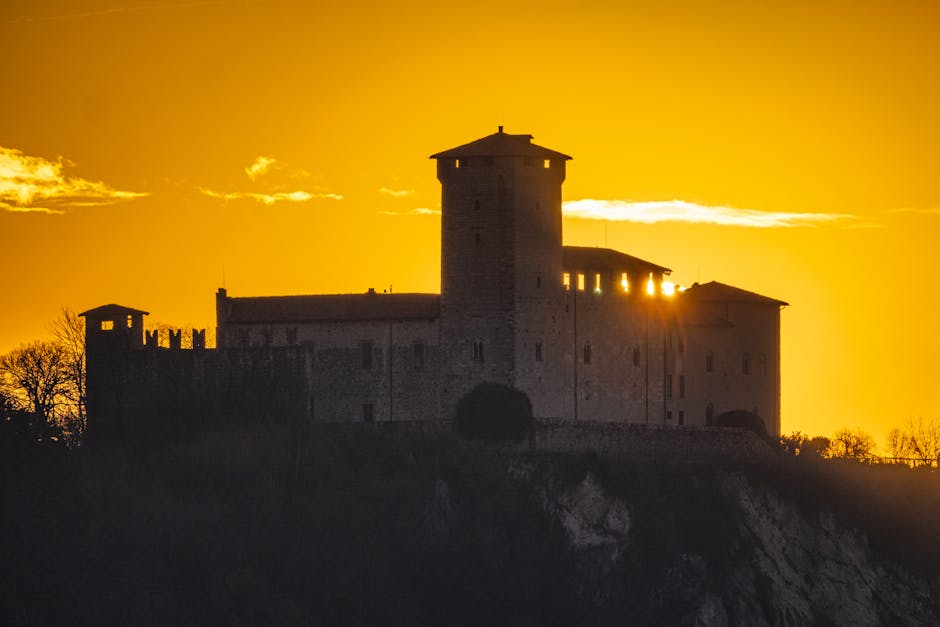
Monforte d’Alba — Piazzale Giacomo Matteotti / Piazza Cesare Battisti, 12065 Monforte d’Alba CN. Known for its natural amphitheater and music festival, the village has several belvederes reachable on foot from the main square. Access: free. Hours: village accessible at all times; shop opening hours vary. Ideal experience: wander the alleys climbing toward the terraces to find compositions that pair tiled roofs with late-day light.
Vineyards, Scenic Roads and Photowalks
The “Strada del Barolo” (SP3 and SP26 between La Morra, Barolo and Monforte d’Alba) is the most iconic route for photographers. Route: SP3/SP26, linking the villages from La Morra (Piazza Castello, 12064 La Morra CN) to Monforte d’Alba. Accessible by car, bike or motorbike, it winds between rows of vines, farmhouses and tiny hamlets. Parking: public lots in villages; avoid parking on private shoulders. Recommended timing: arrive 45–90 minutes before sunset and follow the road slowly to spot viewpoints.
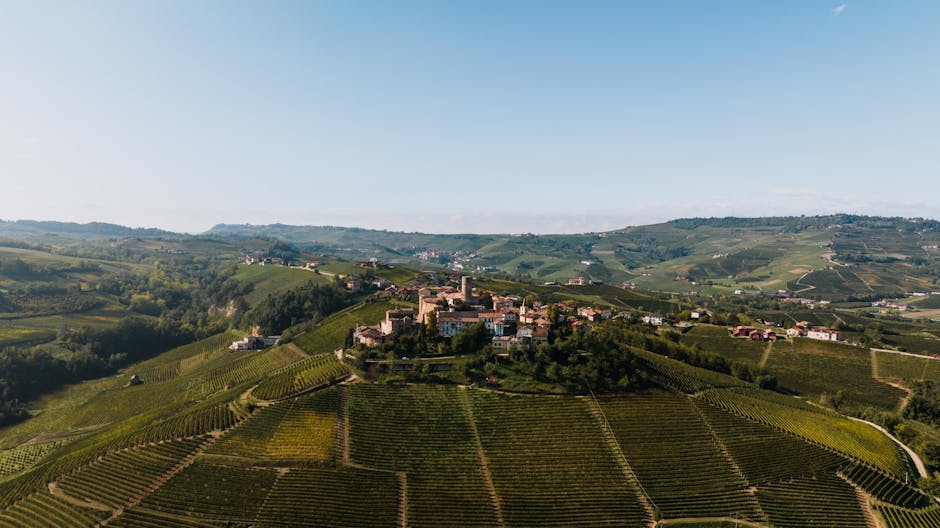
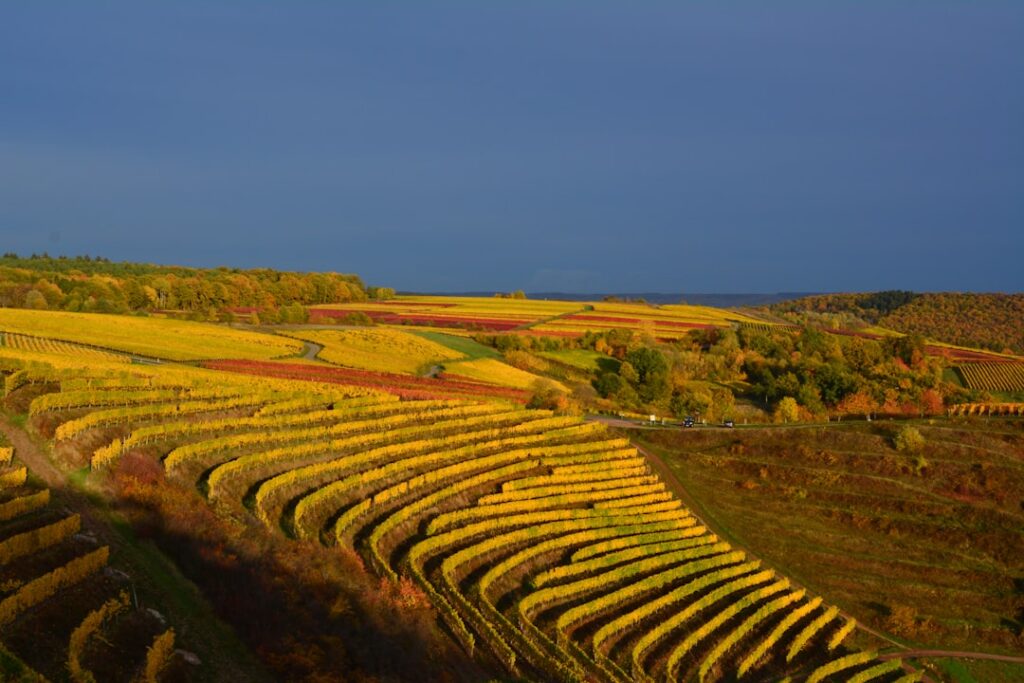
Terraced vineyard near Novello — Via Castello, 12050 Novello CN. Novello is less touristy and offers intimate framing between stone walls and terraced vines. Access: free; open access. Practical tip: favor a 50–85 mm lens to isolate bunches and vine rows with the setting sun in the background.
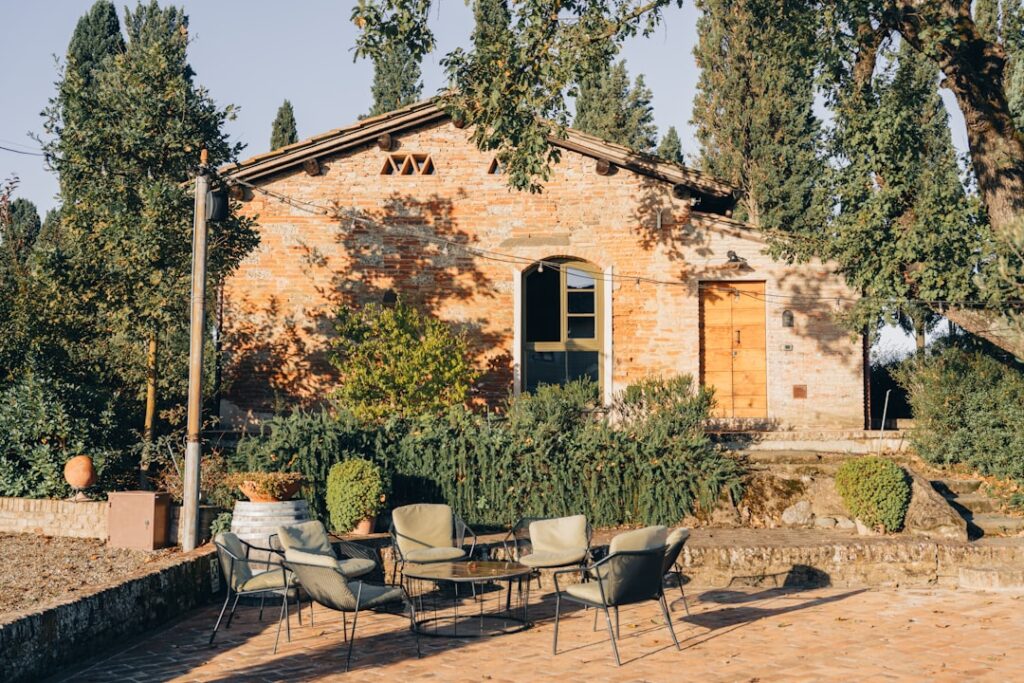
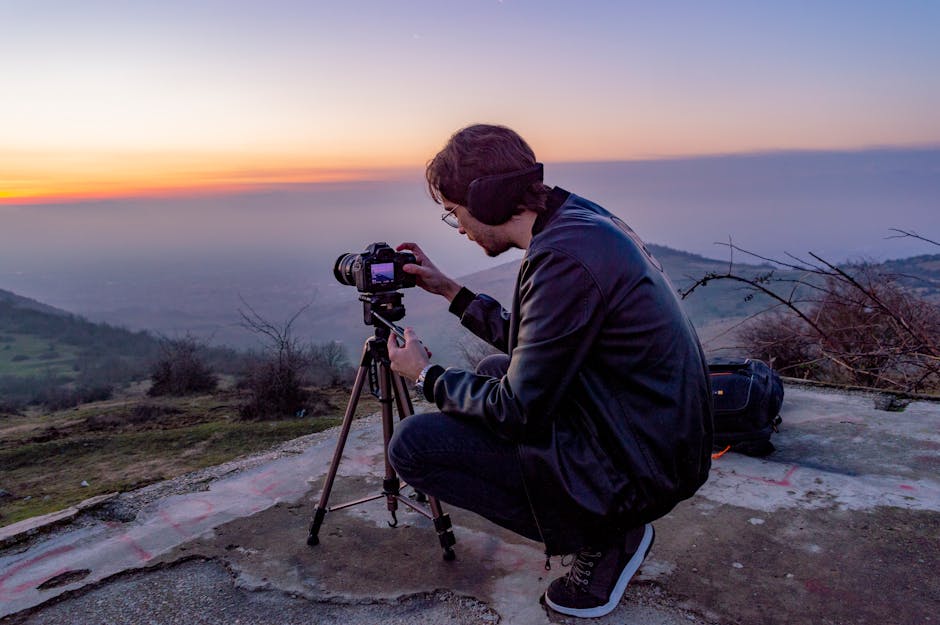
Suggested photowalk: start with a local aperitivo (a glass of Barbera or Barolo) in a village osteria, then climb toward the belvedere. Gear: lightweight tripod, a wide-angle lens and a 70–200 mm telephoto to compress the hills, graduated ND filters, spare batteries and memory cards. Strictly respect private property: don’t walk through vine rows without permission and park in designated spaces.
Alba’s Historic Center, the Tanaro Riverbanks and Urban Sunsets
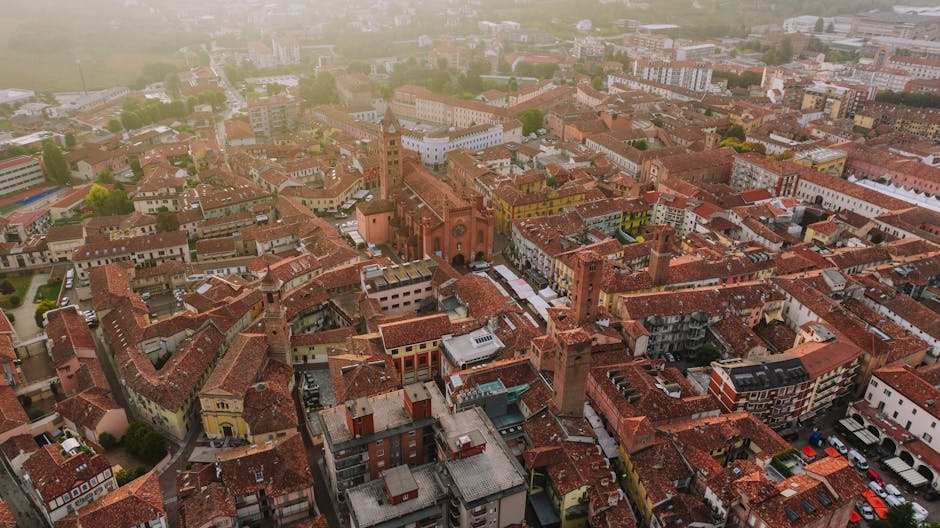
Piazza Risorgimento and Alba’s historic centre — Corso Piave / Piazza Risorgimento, 12051 Alba CN. Alba’s center, with its medieval towers (like the Torre di Barbaresco for the wider area) and arcades, offers urban sunsets where warm light brings out the ochres of facades. Access: free. Hours: the town is accessible at all times; summer shops open until 20:00–22:00. Tips: for an urban sunset shot, pick an angle that includes arcades and a tower silhouette in the background, and arrive before market crowds (markets usually happen in the morning).
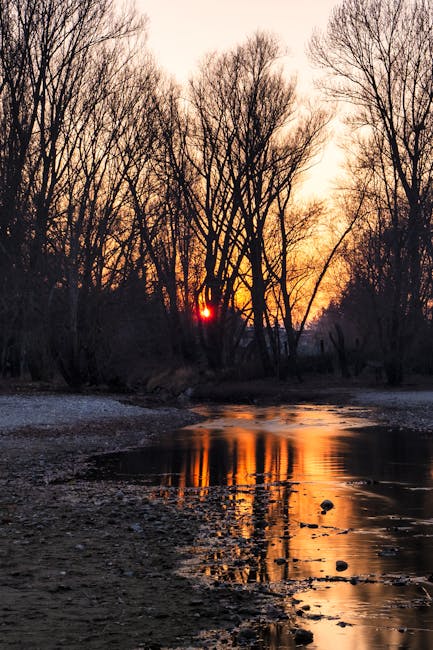
Tanaro riverbanks — Lungotanaro San Lazzaro, parking near Ponte sul Tanaro, 12051 Alba CN. The Tanaro river crosses Alba and creates highly photogenic reflections at sunset. Walk along the Lungotanaro to capture golden-tinted water, bridges and the town’s silhouette. Access: free. Hours: open. Tip: the best light is on the east side of the bank for direct reflections; use a polarizer to reduce unwanted glare if you want to emphasize the sky color.
Local Practical Tips to Nail Your Sunsets
Timing & weather: check exact opening times for castles and museums (they vary in low season). Sunset timing: in summer, plan to be on site at least 45–60 minutes before sunset; in autumn and winter, 20–30 minutes is usually enough. Useful apps: PhotoPills / Sun Surveyor to predict sun angle; Windy for wind; Google Maps / Street View to scout parking.
Prices & access: most belvederes are free. To visit interiors (Castello di Grinzane Cavour, Castello di Barolo, Castello di Serralunga d’Alba), budget €5–10 per person; reduced rates for students and seniors. Opening hours vary by season (usually 10:00–18:00 in high season). Parking: favor municipal car parks (Piazza Castello, La Morra; Piazza del Castello, Grinzane) to avoid fines.
Safety & land respect: heed private vineyard signs and “proprietà privata” notices. Bring a water bottle, a windproof jacket (evenings can be cool), and take your rubbish with you. For drones: Italian regulations apply, and some private or museum sites prohibit flights; check with local tourist offices.
Conclusion — Take Your Time and Watch Light Transform the Langhe
Sunsets around Alba invite you to slow down and observe: they show how light can literally redraw a landscape, turn a stone village into a golden silhouette, or carve a row of vines into dramatic shadow. To get the most from these moments, combine logistical preparation (hours, access, parking), artistic sense (composition, foreground, choice of focal lengths) and respect for the environment (private property, active agriculture). Practically speaking, always arrive early to scout your frames, work multiple compositions (wide, medium, tight) and capture the transition from golden hour to blue hour.
Photographing the Langhe at sunset is also a way to meet local culture: sharing a glass in an osteria, chatting with a winemaker still harvesting grapes at dusk, or simply exchanging a smile with a resident. Keep in mind the weather can surprise you—sometimes morning mist or low clouds add an even more unique atmosphere at twilight—and returning to the same spot in different seasons reveals very different facets of this landscape. If you already have a specific itinerary in mind, tell me your dates and preferences (hiking, driving, drone, food photography) and I can put together a custom roadbook with exact timing, parking spots and alternative routes to maximize your shots.